What to Send for a Deck or Porch Rendering
The better the intake package, the better the rendering. Good project inputs reduce guessing and help the final visual match the scope the contractor is actually trying to sell.
Start with the existing space
The most useful rendering starts with the real house and yard. Send wide photos of the full work area, close-up photos of connection points, and any angles that show doors, windows, grade changes, utilities, existing rails, stairs, patios, pools, fences, or landscaping that needs to stay visible.
A quick phone photo can be enough if it shows the right information. The goal is not perfect photography. The goal is enough context to understand where the project lives.
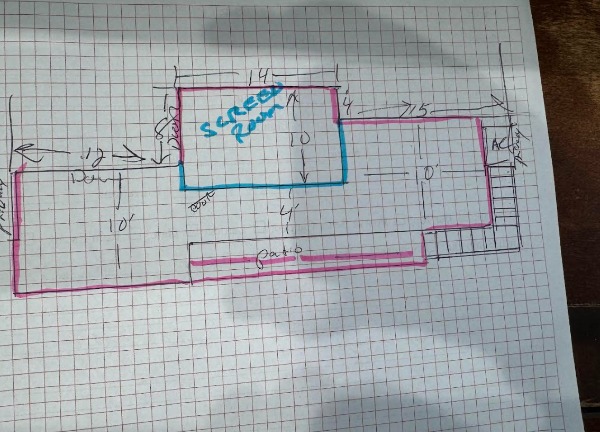
Send the rough layout
A sketch, markup, estimate drawing, or screenshot can all work. Include overall deck size, stair location, landing location, roof or porch enclosure notes, rail runs, privacy screen areas, and any major options the customer is considering.
- Overall width, projection, and height from grade.
- Door locations, house corners, bump-outs, and obstacles.
- Stair direction, landing needs, and gate locations.
- Material notes for decking, rails, fascia, trim, posts, and ceiling finishes.
Include the sales question
A rendering is more effective when it knows what decision it is supposed to support. Are you trying to sell a covered roof upgrade? Compare rail colors? Show a privacy wall? Help a customer understand why the larger layout is worth it?
That context shapes the camera angles and the details that need attention. A proposal visual should be composed around the decision the homeowner needs to make.
Flag what must be accurate
Not every visual detail carries the same weight. If a specific railing brand, deck color, skirting style, column wrap, or trim package is part of the proposal, call it out. If the drawing is conceptual and some items are flexible, say that too.
Clear notes keep the rendering useful instead of accidentally creating expectations the contractor did not intend to sell.
Common Questions
Do I need a CAD file to get a rendering?
No. A CAD file helps, but many rendering requests can start from photos, measurements, sketches, and clear notes.
Can rough customer sketches be used?
Yes. Rough sketches are often useful because they show the customer intent, even if the final layout needs cleanup.
Sources and Further Reading
Related Resources
Want this kind of visual for your next proposal?
Send the rough layout, site photos, measurements, or customer sketch. I can help turn it into a polished rendering or drawing package.
Start a Project